TodayVandaagAujourd'hui / Journal club
Breast · Whole- vs partial-breast irradiation · Monday 23 November 2026maandag 23 november 2026lundi 23 novembre 2026
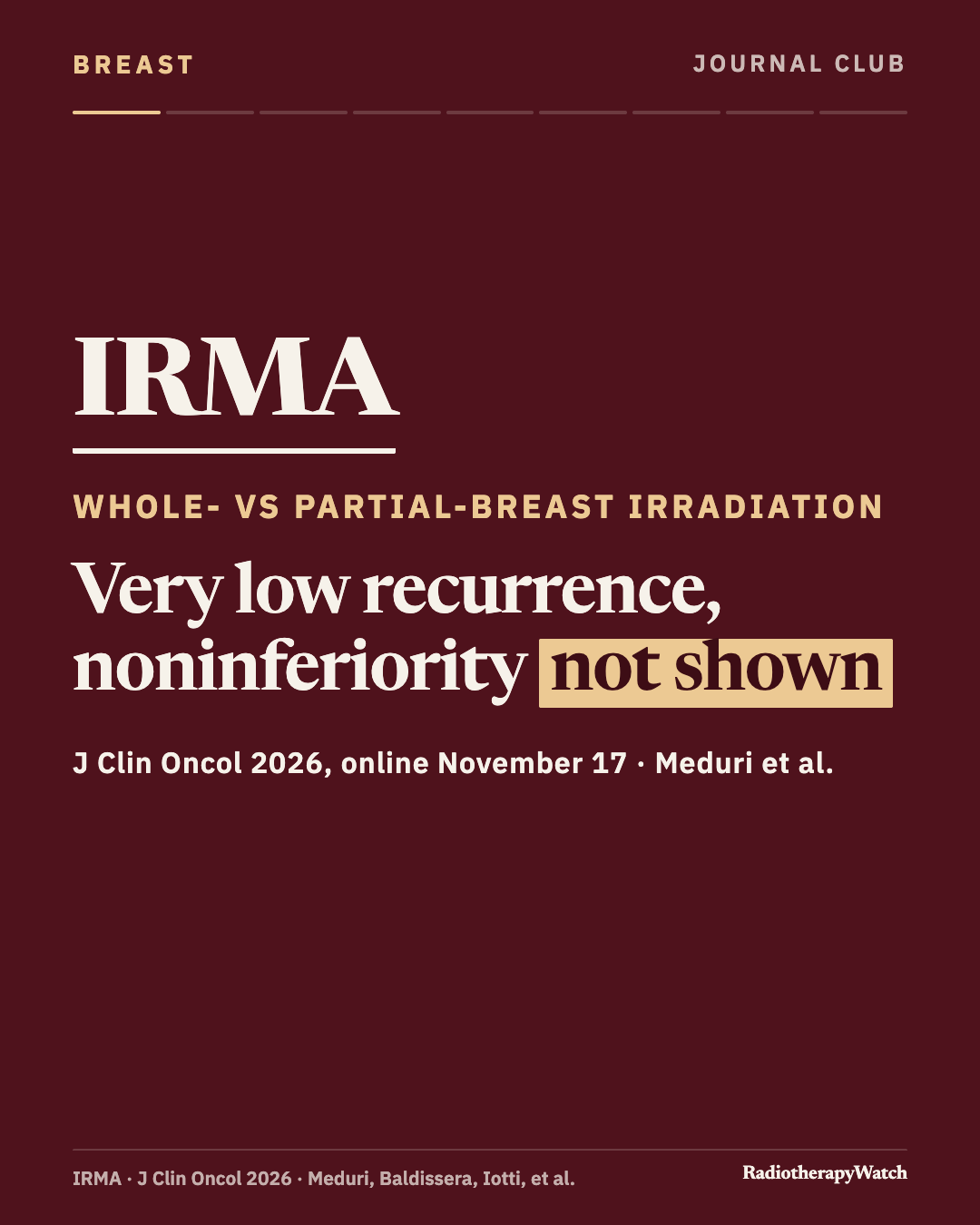
IRMA
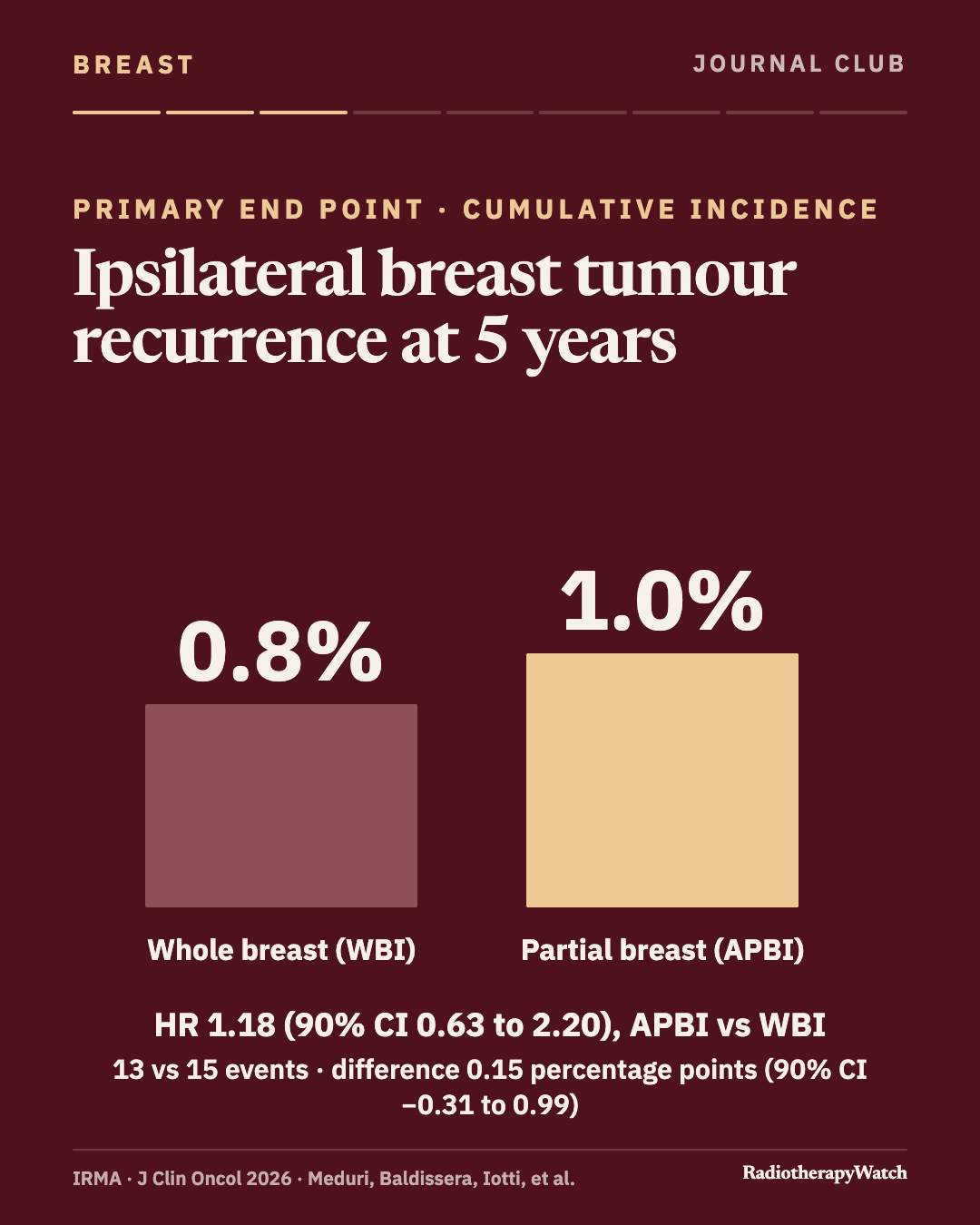
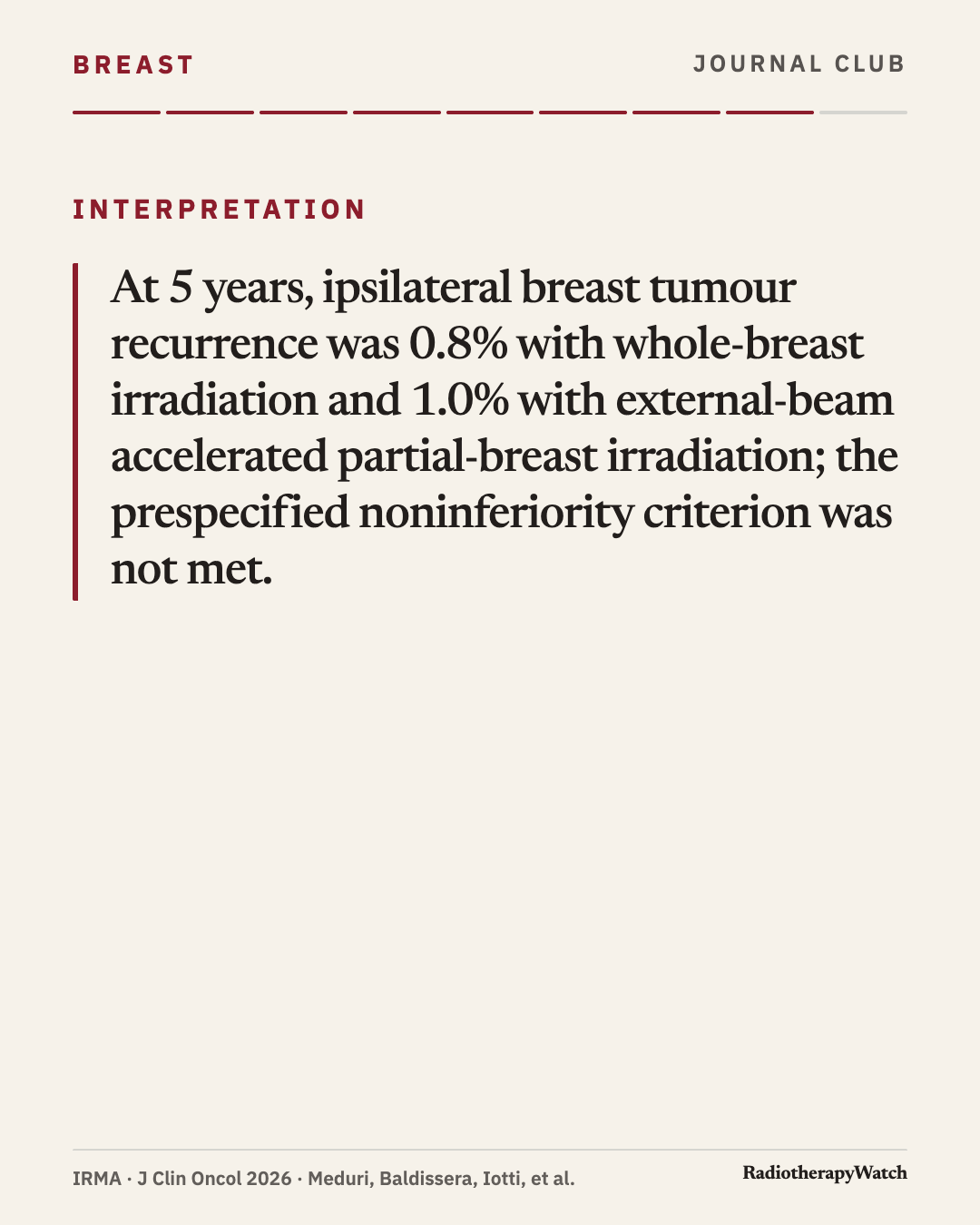
IRMA: 5-year ipsilateral breast tumour recurrence was 0.8% with whole-breast irradiation and 1.0% with external-beam accelerated partial-breast irradiation, but noninferiority was not formally demonstrated: the hazard ratio was 1.18 (90% CI 0.63 to 2.20), and the upper confidence limit of 2.20 is above the prespecified margin of 1.5.
The trial in 9 cardsDe studie in 9 kaartenL'essai en 9 cartesDownload PDFPDF downloadenTélécharger le PDF
Podcast
Design
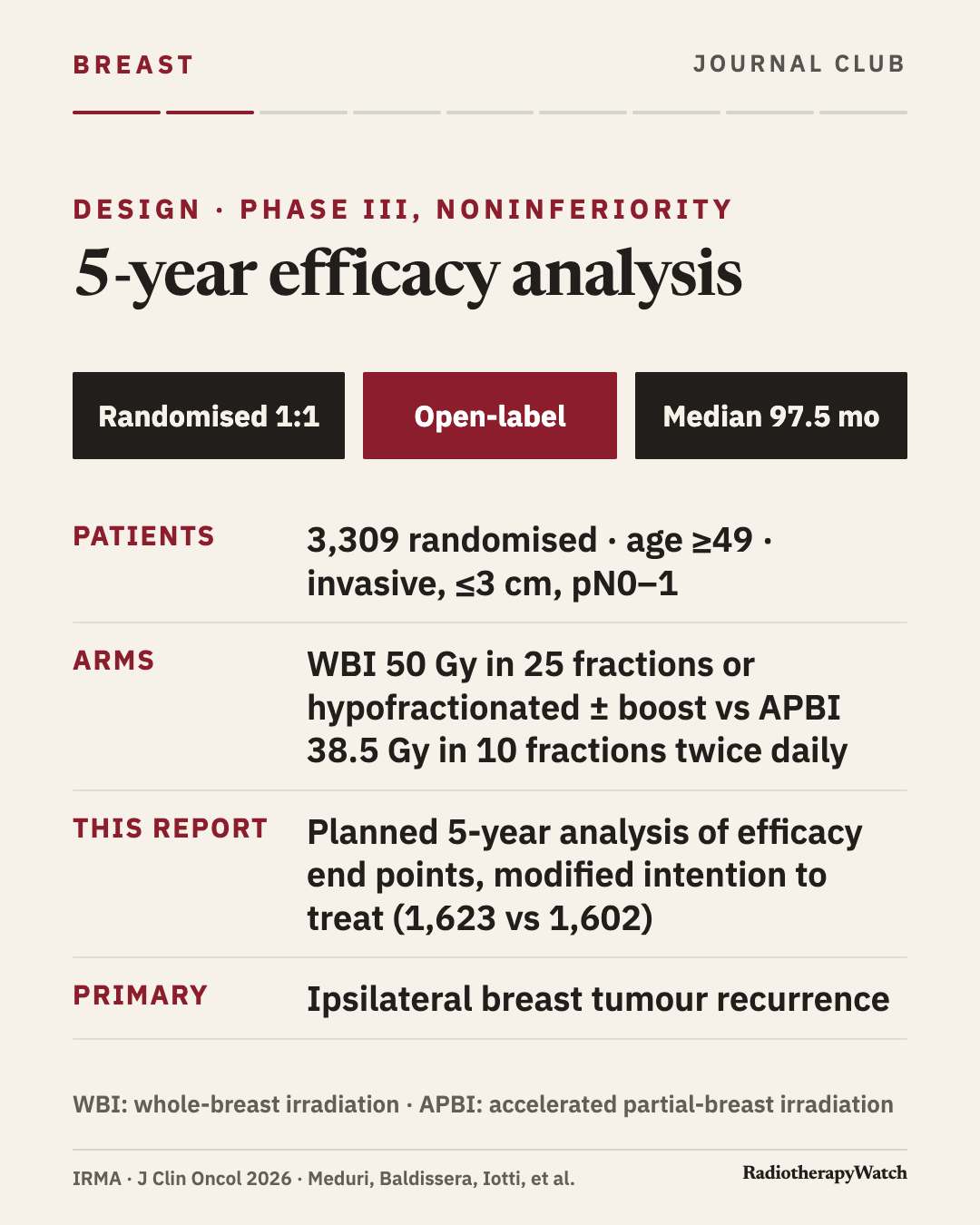
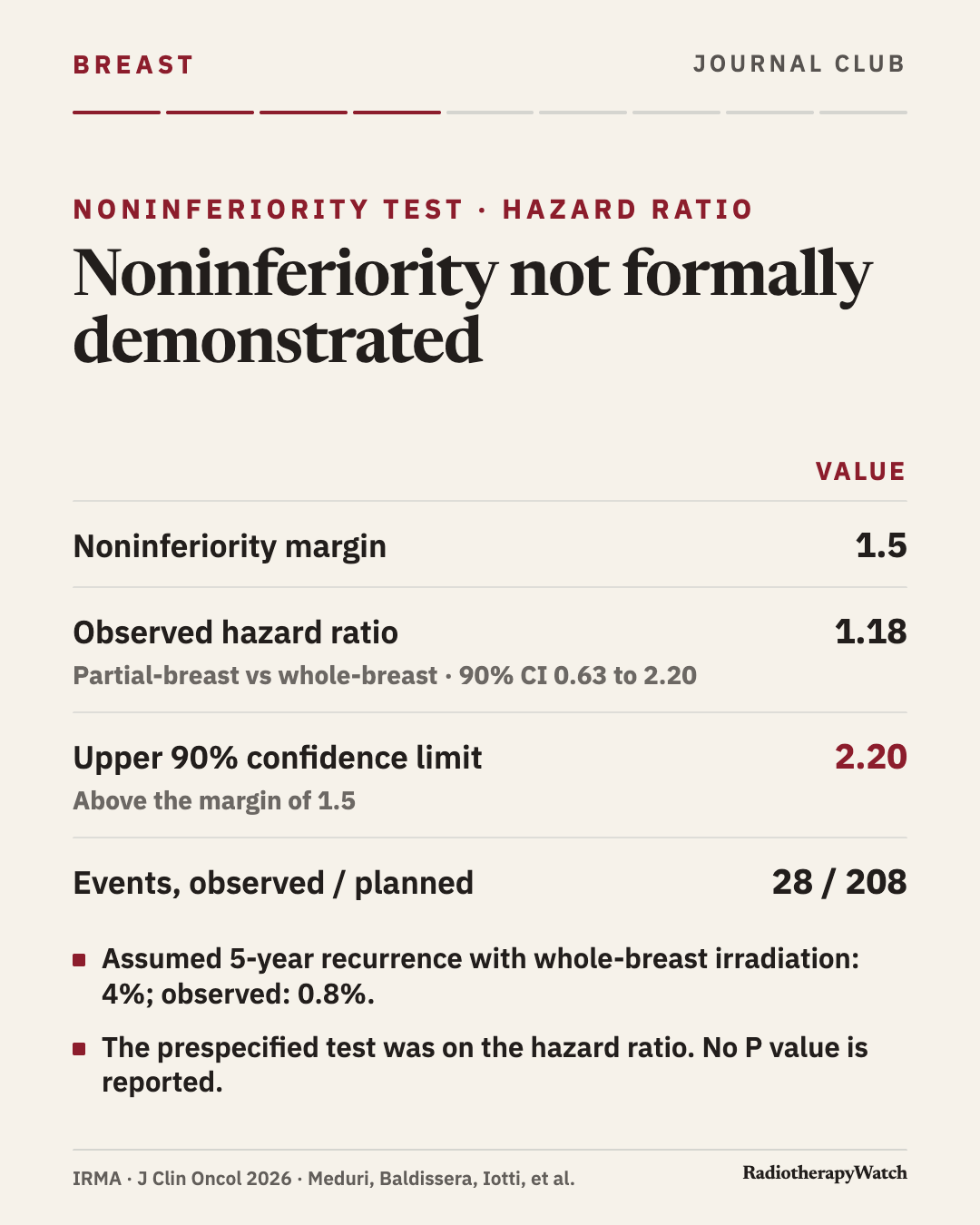
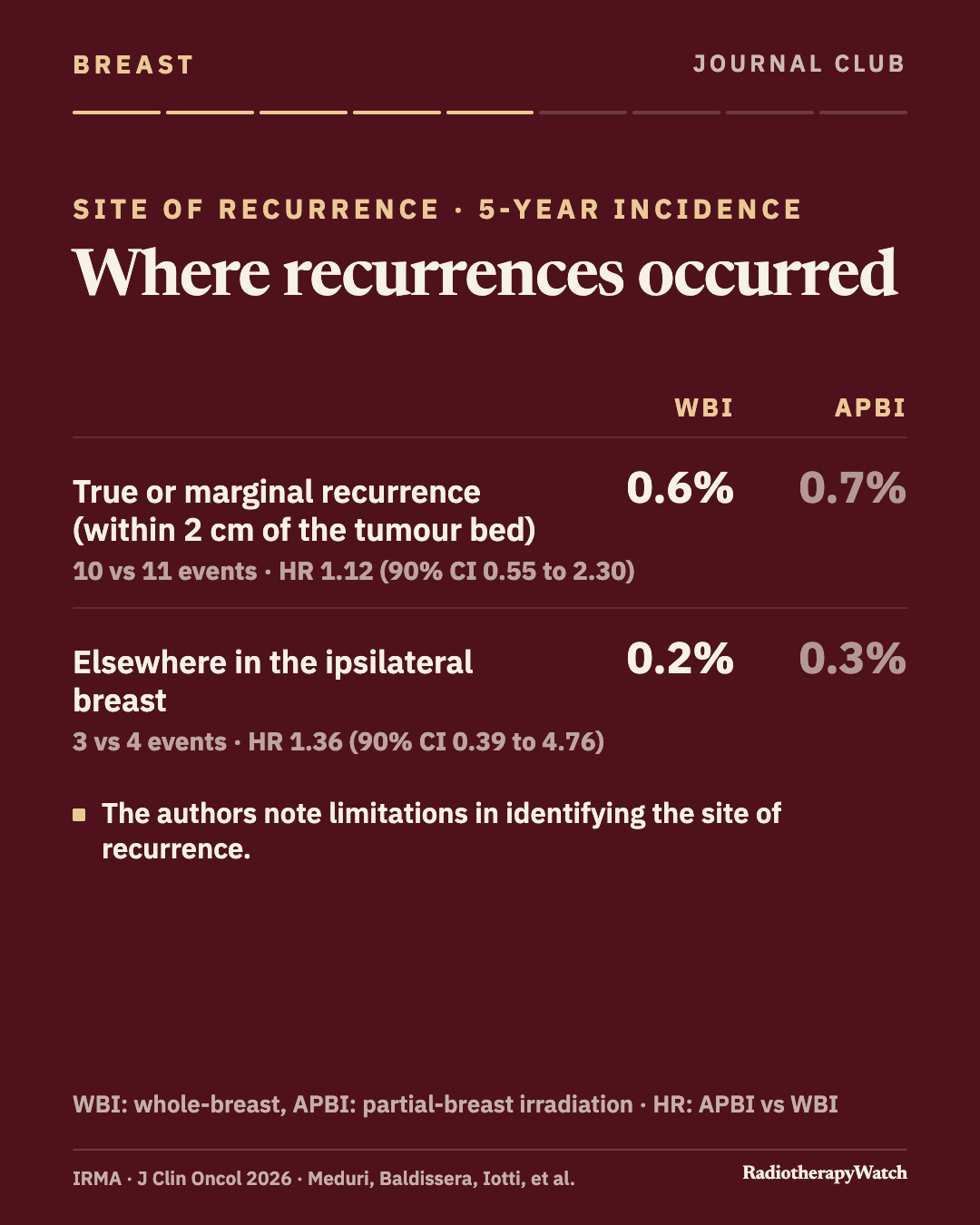
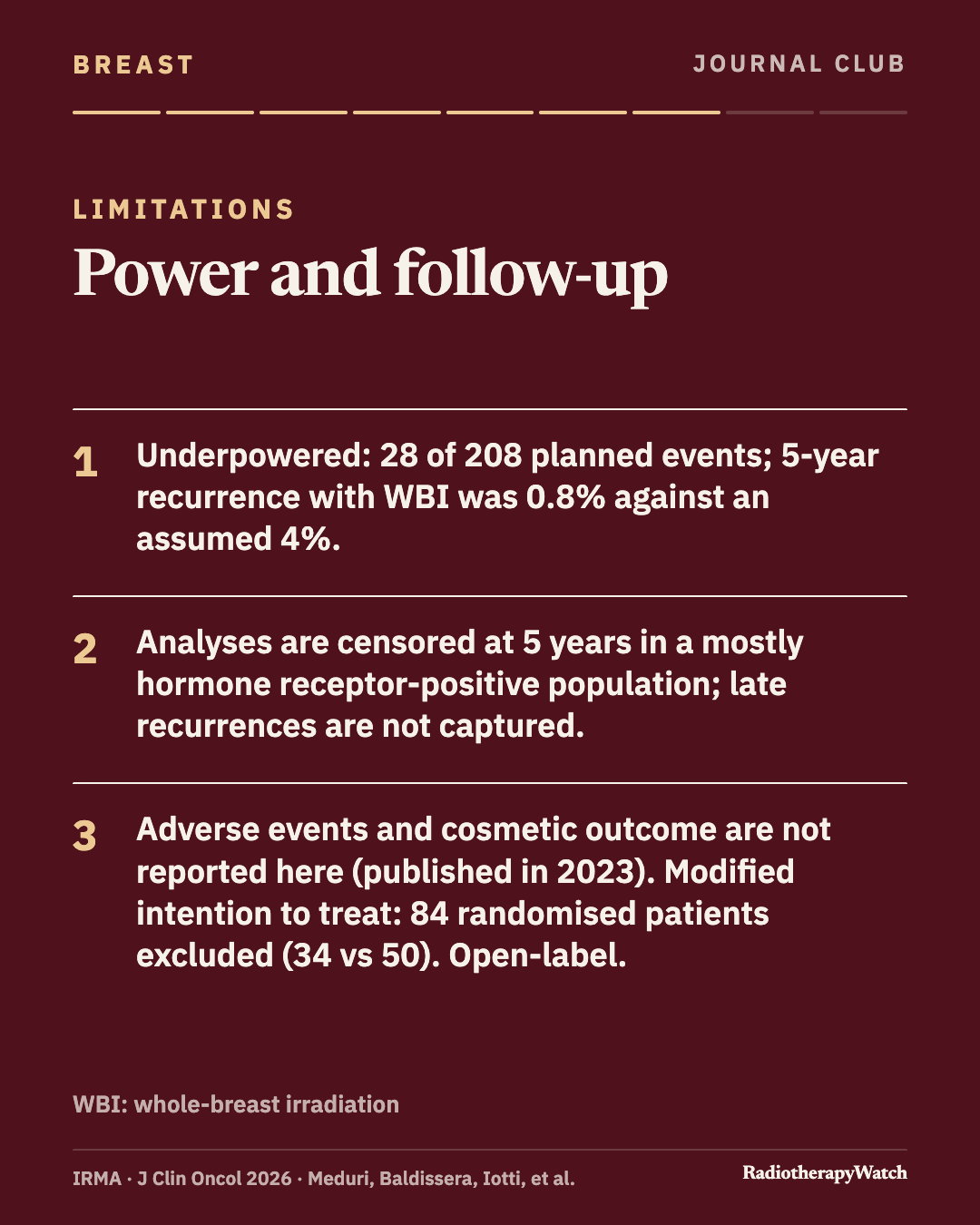
IRMA is an open-label, phase 3, randomised noninferiority trial at 35 centres in five countries. Between 2007 and 2019, 3,309 patients aged 49 years or older with invasive breast cancer of 3 cm or less, pN0 or pN1, treated with breast-conserving surgery with clear margins, were randomised 1:1 to whole-breast irradiation (WBI; 50 Gy in 25 fractions or an equivalent hypofractionated schedule, with a tumour bed boost allowed) or external-beam accelerated partial-breast irradiation (APBI; 38.5 Gy in 10 fractions twice daily over 5 days, no boost). This report is the planned 5-year analysis of the primary end point and the secondary efficacy end points in the modified intention-to-treat population (1,623 versus 1,602), at a median follow-up of 97.5 months. The trial was designed for 208 recurrence events, assuming a 5-year recurrence rate of 4% with WBI; 28 occurred.
Results
- Ipsilateral breast tumour recurrence at 5 years (primary end point): 13 events, 0.8% (95% CI 0.5 to 1.4) with WBI versus 15 events, 1.0% (95% CI 0.6 to 1.6) with APBI; hazard ratio 1.18 (90% CI 0.63 to 2.20); absolute difference 0.15 percentage points (90% CI −0.31 to 0.99).
- Noninferiority required the upper limit of the one-sided 95% CI of the hazard ratio (the upper limit of the 90% CI reported) to be below 1.5; it was 2.20. The authors attribute this to an event rate five-fold lower than assumed.
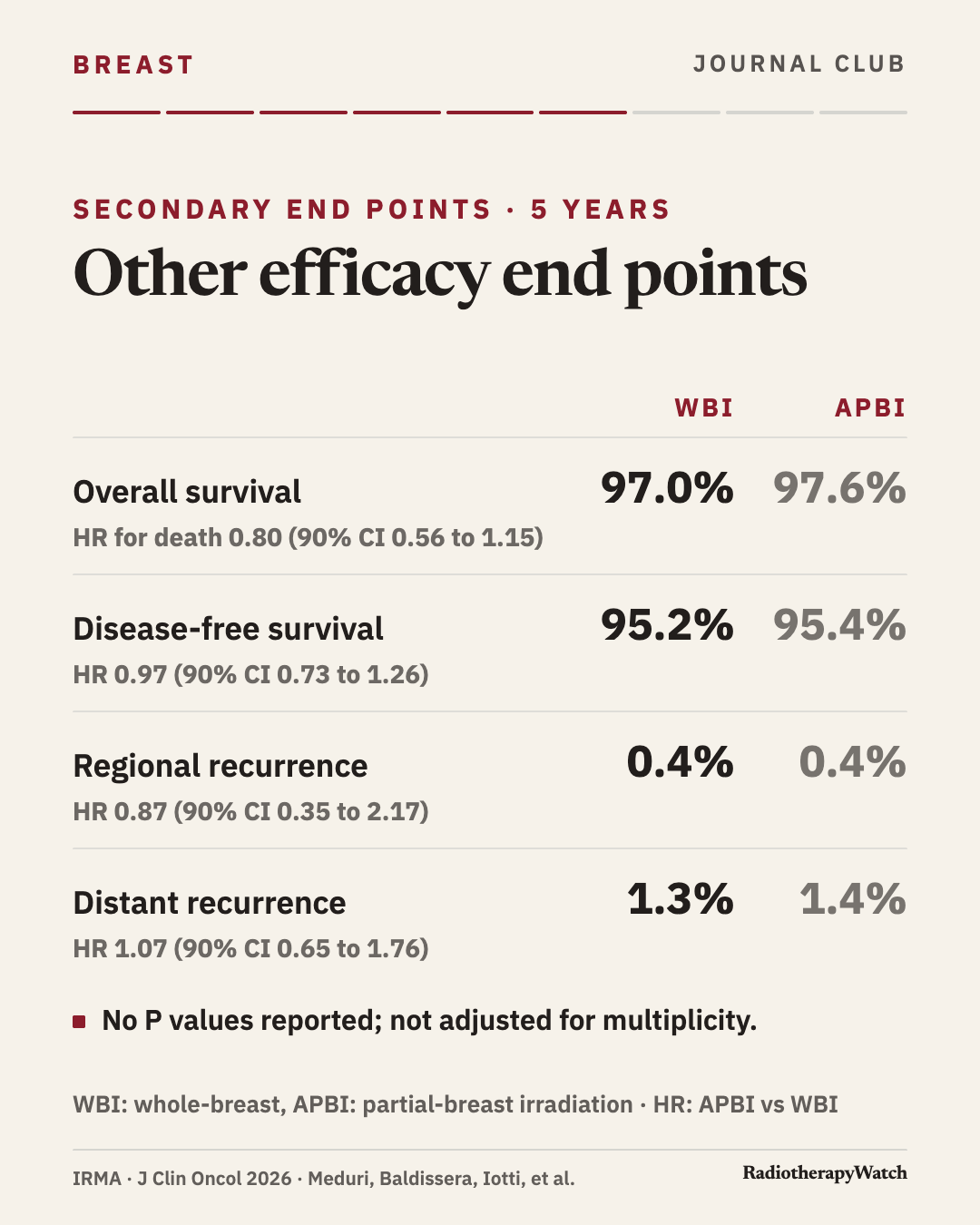
- Overall mortality at 5 years: 47 deaths, 3.0% (95% CI 2.2 to 3.9) versus 37 deaths, 2.4% (95% CI 1.7 to 3.3); hazard ratio 0.80 (90% CI 0.56 to 1.15).
- Any first breast cancer–related event at 5 years: 4.8% (95% CI 3.8 to 5.9) versus 4.6% (95% CI 3.6 to 5.7); hazard ratio 0.97 (90% CI 0.73 to 1.26).
- Regional lymph node recurrence at 5 years: 0.4% versus 0.4%, hazard ratio 0.87 (90% CI 0.35 to 2.17); distant recurrence at 5 years: 1.3% versus 1.4%, hazard ratio 1.07 (90% CI 0.65 to 1.76).
What the trial does not show
Formal noninferiority of APBI for local control. With 28 of the 208 planned events, the confidence interval of the hazard ratio is compatible with a lower and with a more than two-fold higher hazard of recurrence. Results are censored at 5 years in a population that is about 95% oestrogen receptor–positive, in which late recurrences remain clinically relevant; 10-year follow-up is ongoing. Adverse events and cosmetic outcome are not reported in this paper (they were published in 2023). The as-treated results are in the supplement only. About 59% of patients received endocrine therapy. The secondary end points were not adjusted for multiple comparisons; the lower number of nonbreast second tumours with APBI is described by the authors as probably incidental.
Reference
Meduri B, Baldissera A, Iotti C, et al. Partial-breast irradiation versus whole-breast irradiation for low-risk invasive breast carcinoma: 5-year results of the multicenter, randomized, phase III IRMA trial. J Clin Oncol 2026; published online Nov 17. https://doi.org/10.1200/JCO-26-00969. ClinicalTrials.gov NCT01803958.
Funding. Italian Ministry of Health; Regional Authority for Health Policies of Emilia-Romagna; Dutch Cancer Society (KWF) for the Dutch patients.
Educational content for healthcare professionals. Not medical advice. Produced with AI assistance; figures checked against the full text.