TodayVandaagAujourd'hui / Journal club
Prostate · Early adverse event results · Monday 23 November 2026maandag 23 november 2026lundi 23 novembre 2026
PACE-NODES
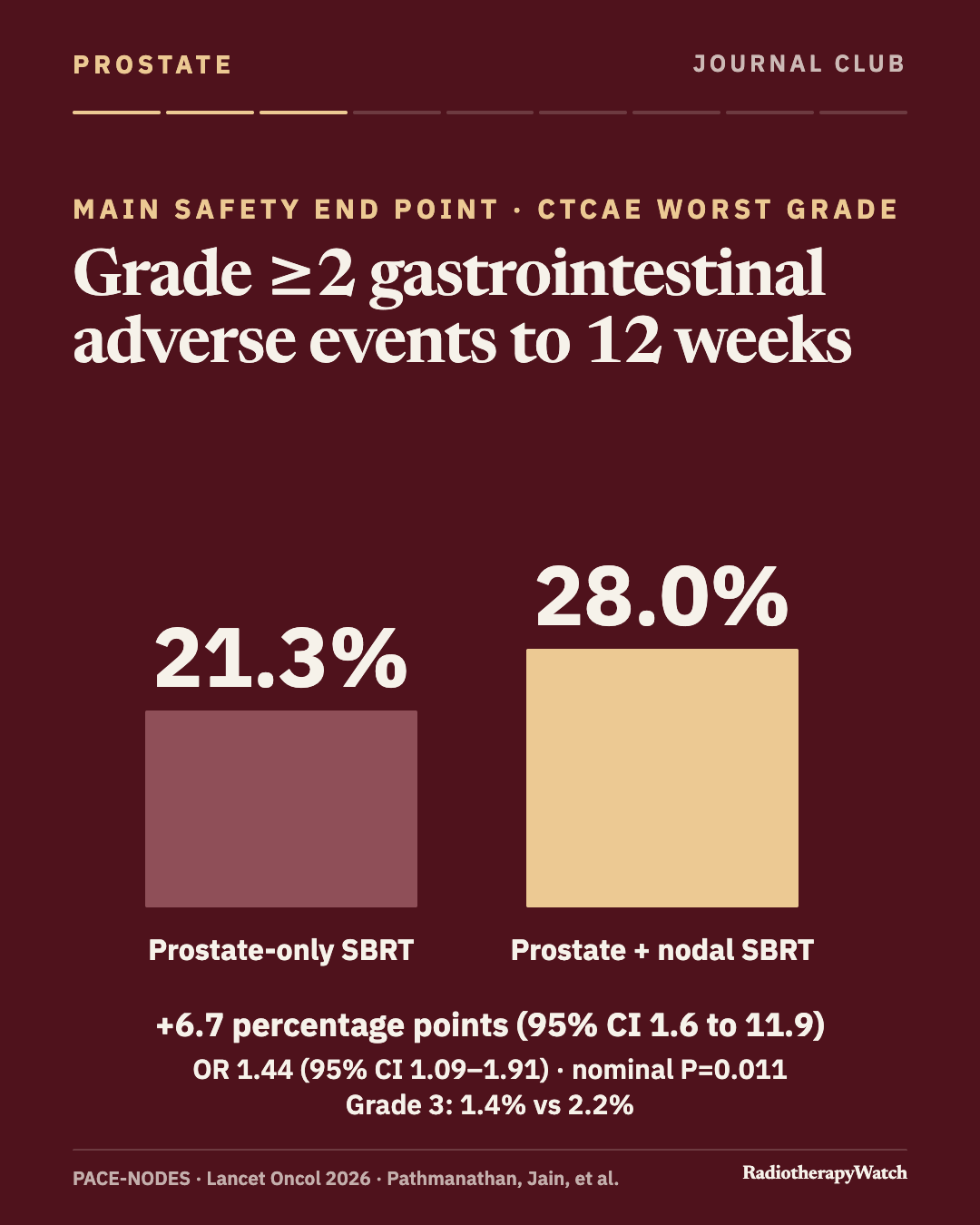
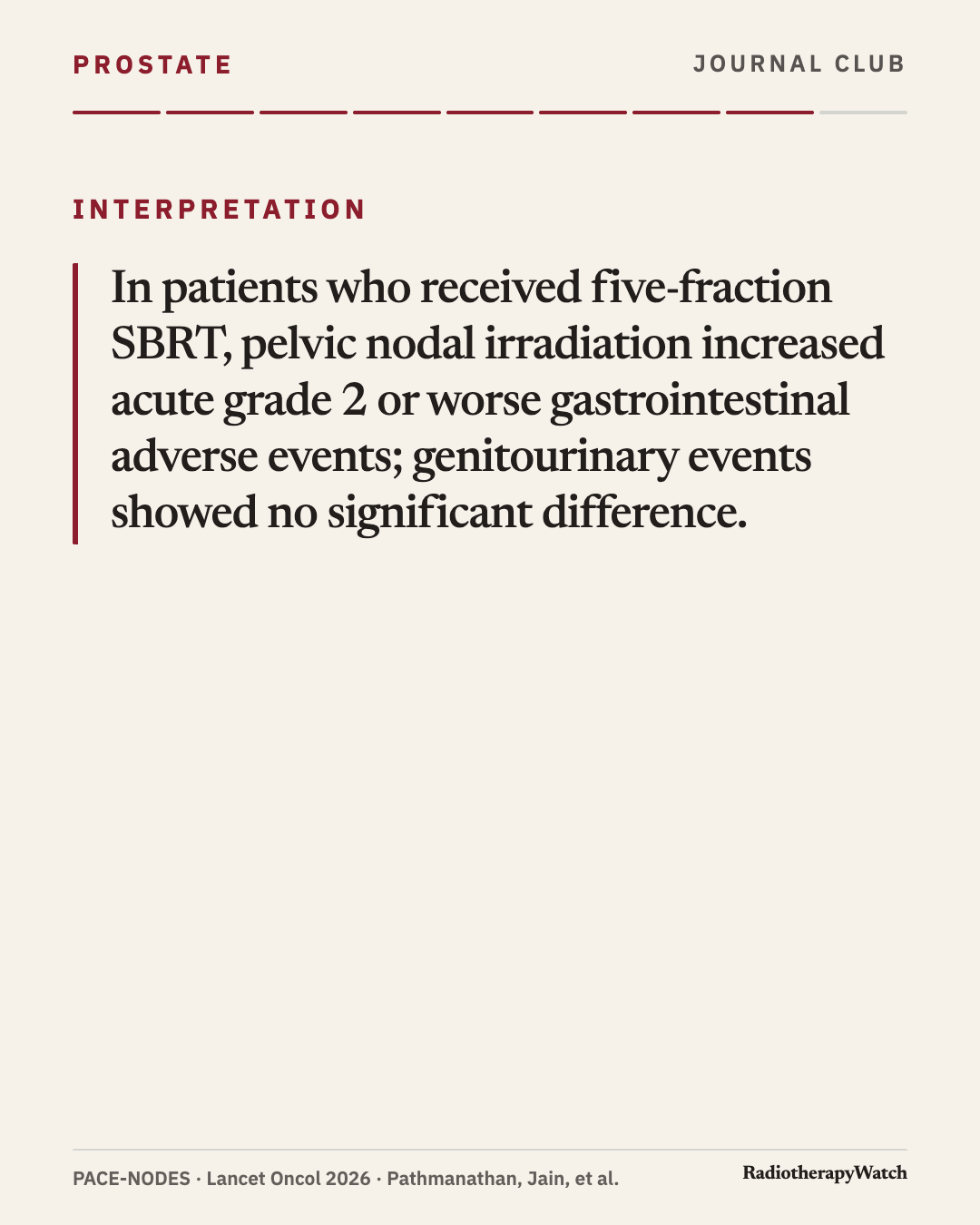
PACE-NODES: adding pelvic nodal SBRT to prostate SBRT increased acute gastrointestinal adverse events of grade 2 or worse from 21.3% to 28.0% within 12 weeks; acute genitourinary adverse events were not increased. Efficacy results are not yet available.
The trial in 9 cardsDe studie in 9 kaartenL'essai en 9 cartesDownload PDFPDF downloadenTélécharger le PDF

Design
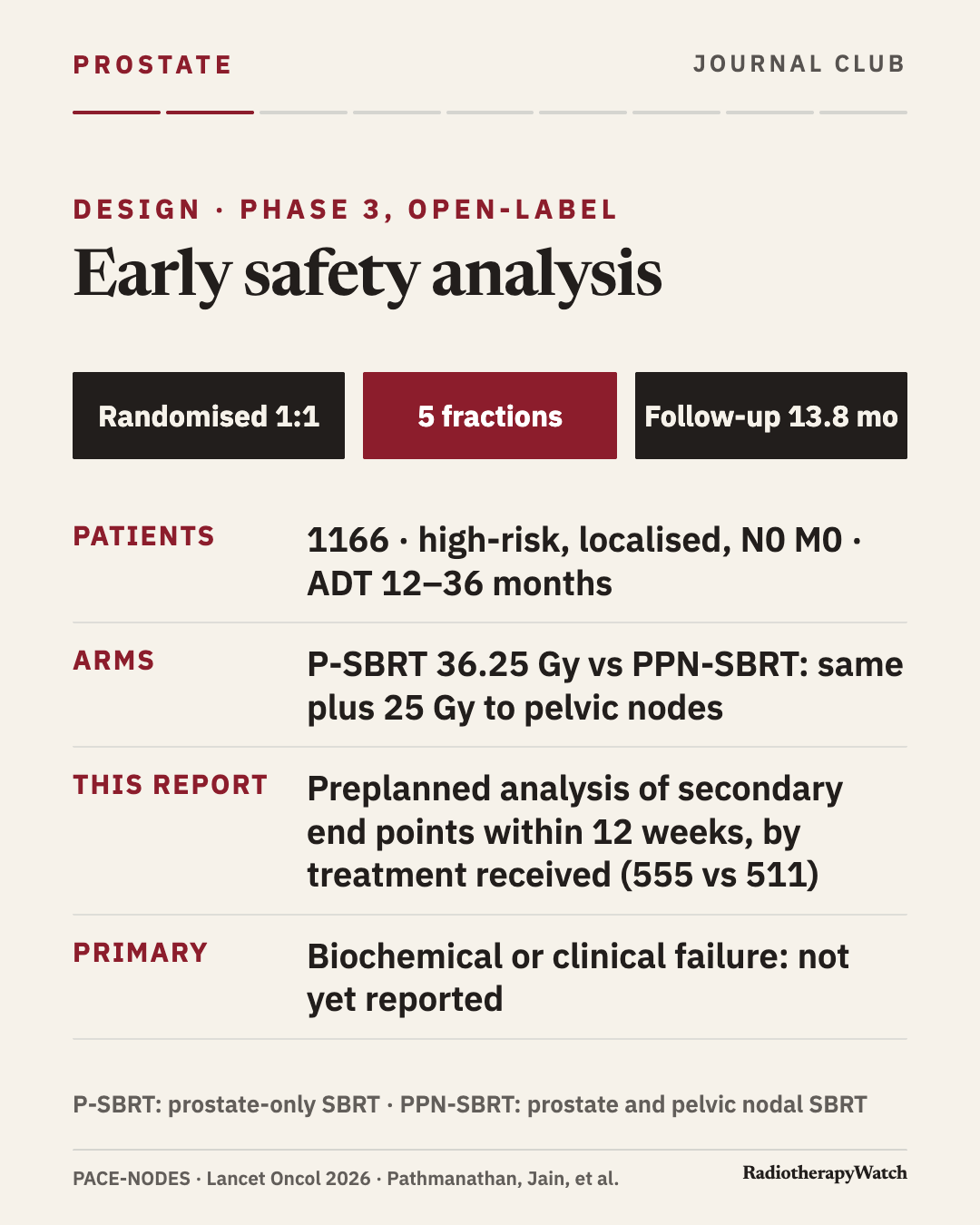
PACE-NODES is an open-label, phase 3, randomised trial at 47 hospitals in the UK, Ireland and New Zealand. 1166 men with high-risk, localised prostate cancer (N0 M0) planned for 12 to 36 months of androgen deprivation therapy were assigned to prostate-only SBRT (36.25 Gy in five fractions) or to the same prostate dose plus 25 Gy in five fractions to the pelvic lymph nodes. This is a preplanned early safety analysis of secondary end points, analysed by treatment received (555 and 511 patients). Median follow-up was 13.8 months.
Results
- CTCAE grade 2 or worse gastrointestinal adverse events within 12 weeks: 118 of 555 (21.3%) with prostate-only SBRT versus 143 of 511 (28.0%) with prostate plus pelvic nodal SBRT; difference 6.7 percentage points (95% CI 1.6 to 11.9), odds ratio 1.44 (95% CI 1.09 to 1.91), p=0.011.
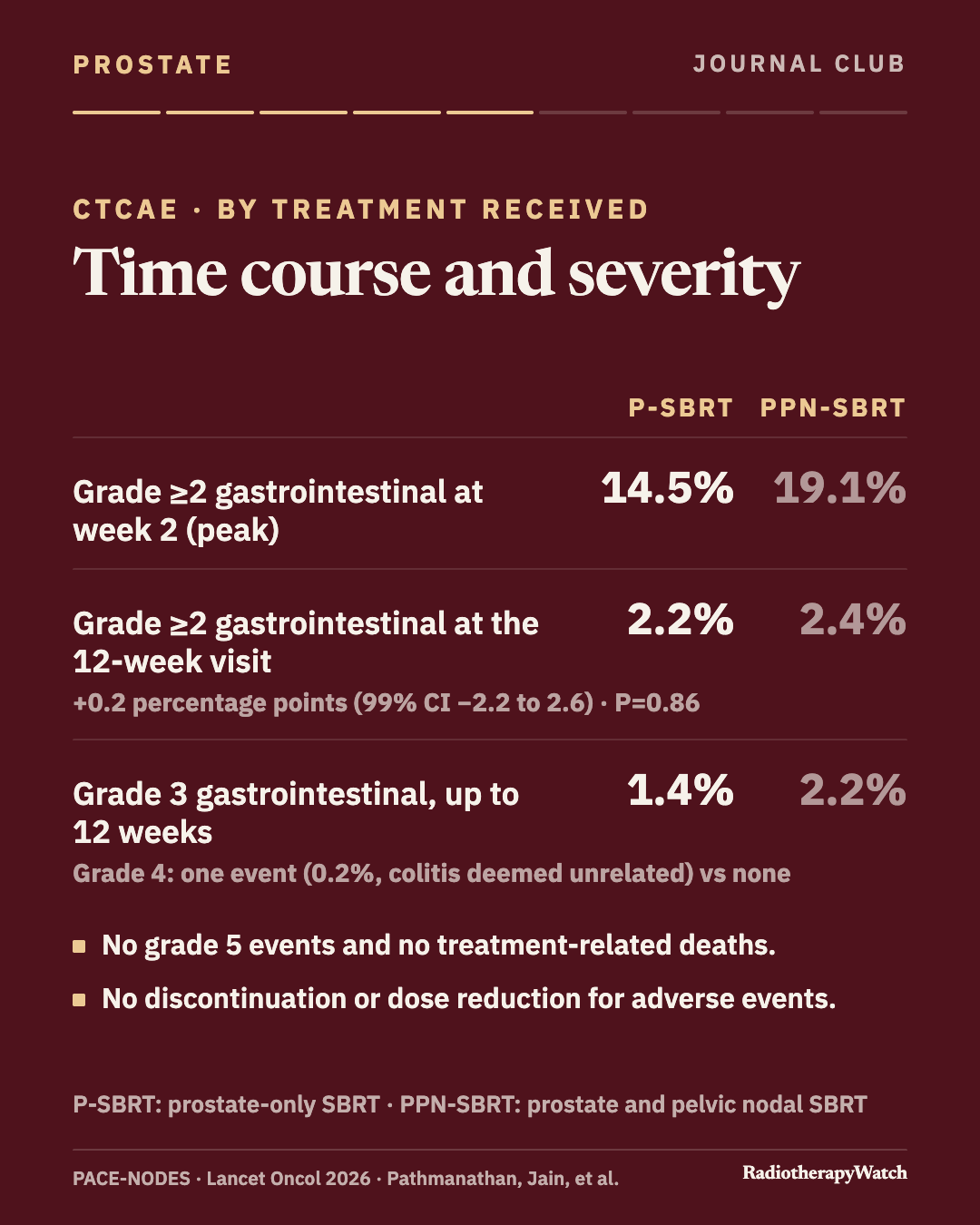
- CTCAE grade 3 gastrointestinal adverse events within 12 weeks: 8 (1.4%) versus 11 (2.2%). There were no treatment-related deaths, and no patient stopped or reduced radiotherapy because of adverse events.
- At the 12-week visit, CTCAE grade 2 or worse gastrointestinal adverse events were present in 12 of 540 (2.2%) versus 12 of 503 (2.4%); difference 0.2 percentage points (99% CI −2.2 to 2.6).
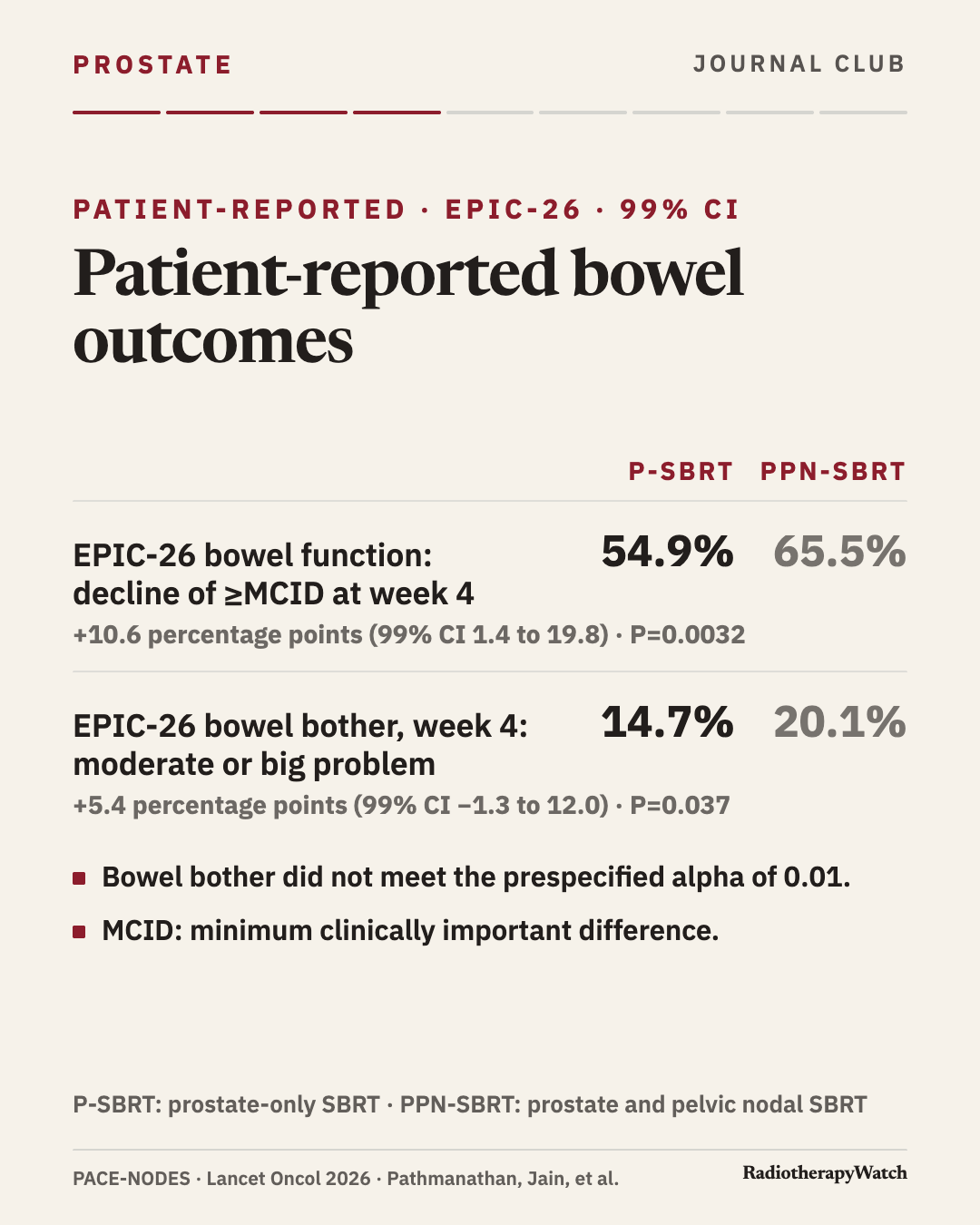
- Patient-reported: a clinically important decrease in EPIC-26 bowel function from baseline to 4 weeks in 208 of 379 (54.9%) versus 239 of 365 (65.5%); difference 10.6 percentage points (99% CI 1.4 to 19.8), p=0.0032.
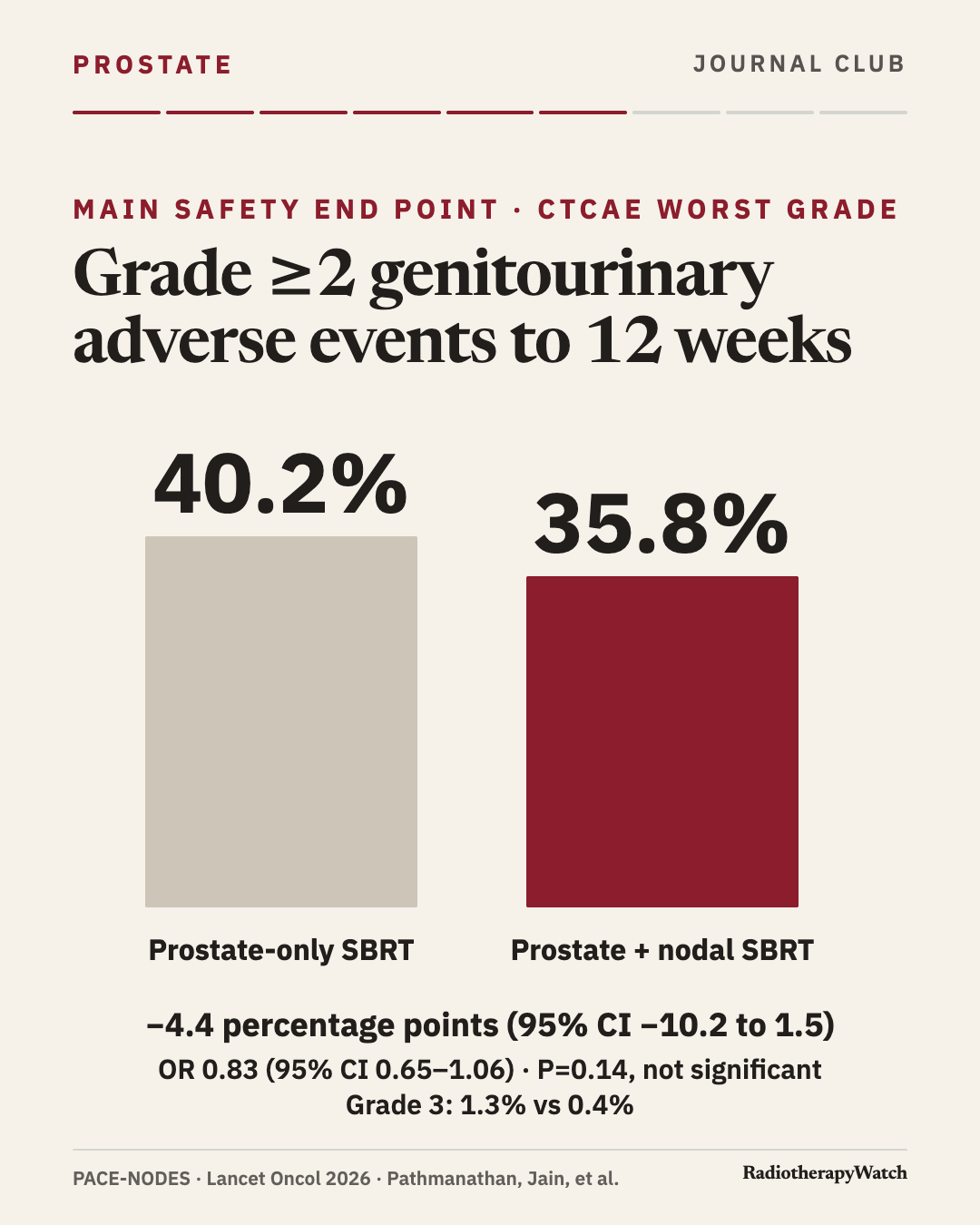
- CTCAE grade 2 or worse genitourinary adverse events within 12 weeks: 223 of 555 (40.2%) versus 183 of 511 (35.8%); difference −4.4 percentage points (95% CI −10.2 to 1.5), odds ratio 0.83 (95% CI 0.65 to 1.06), p=0.14. This is no significant difference, not demonstrated equivalence.
What the trial does not show
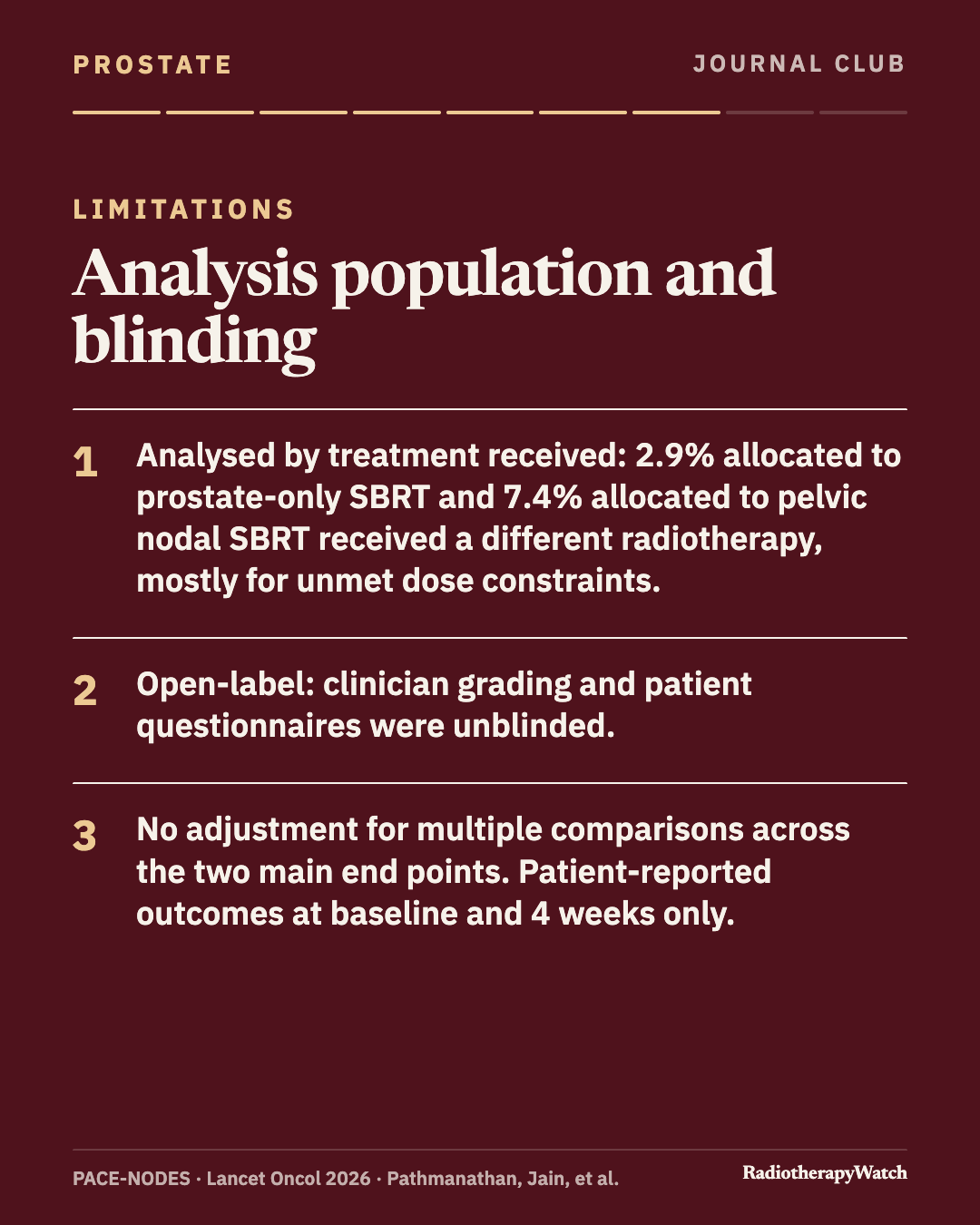
Any effect on cancer control. The primary end point, time to biochemical or clinical failure, is not mature, and late adverse events are not reported. The comparison is by treatment received, not as randomised: 17 of 578 (2.9%) patients assigned to prostate-only SBRT and 43 of 579 (7.4%) assigned to prostate plus pelvic nodal SBRT received a different radiotherapy from that allocated, mostly because dose constraints could not be met. The two main end points were tested without adjustment for multiple comparisons, and assessment was unblinded. The authors state that these data alone are insufficient to support a change in clinical practice.
Quiz
Reference
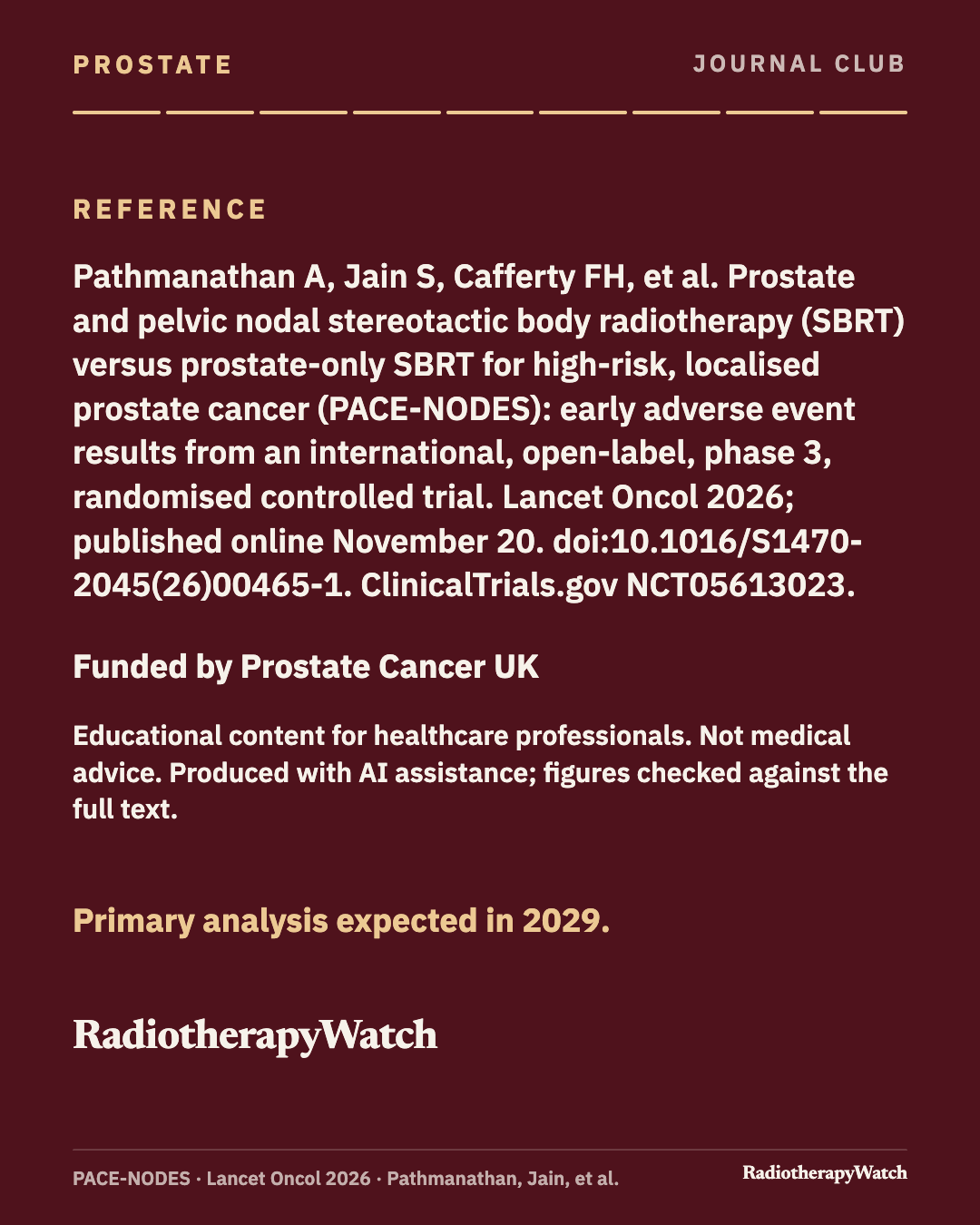
Pathmanathan A, Jain S, Cafferty FH, et al. Prostate and pelvic nodal stereotactic body radiotherapy (SBRT) versus prostate-only SBRT for high-risk, localised prostate cancer (PACE-NODES): early adverse event results from an international, open-label, phase 3, randomised controlled trial. Lancet Oncol 2026; published online Nov 20. https://doi.org/10.1016/S1470-2045(26)00465-1. ClinicalTrials.gov NCT05613023.
Funding. Prostate Cancer UK.
Educational content for healthcare professionals. Not medical advice. Produced with AI assistance; figures checked against the full text.